REAL FÁBRICA DE TAPICES · MADRID, SPAIN
Lo que fuimos y lo que seremos
Solo exhibition & artist residency
September 10–30, 2025
In collaboration with the Italian Cultural Institute of Madrid and ComItEs Madrid.

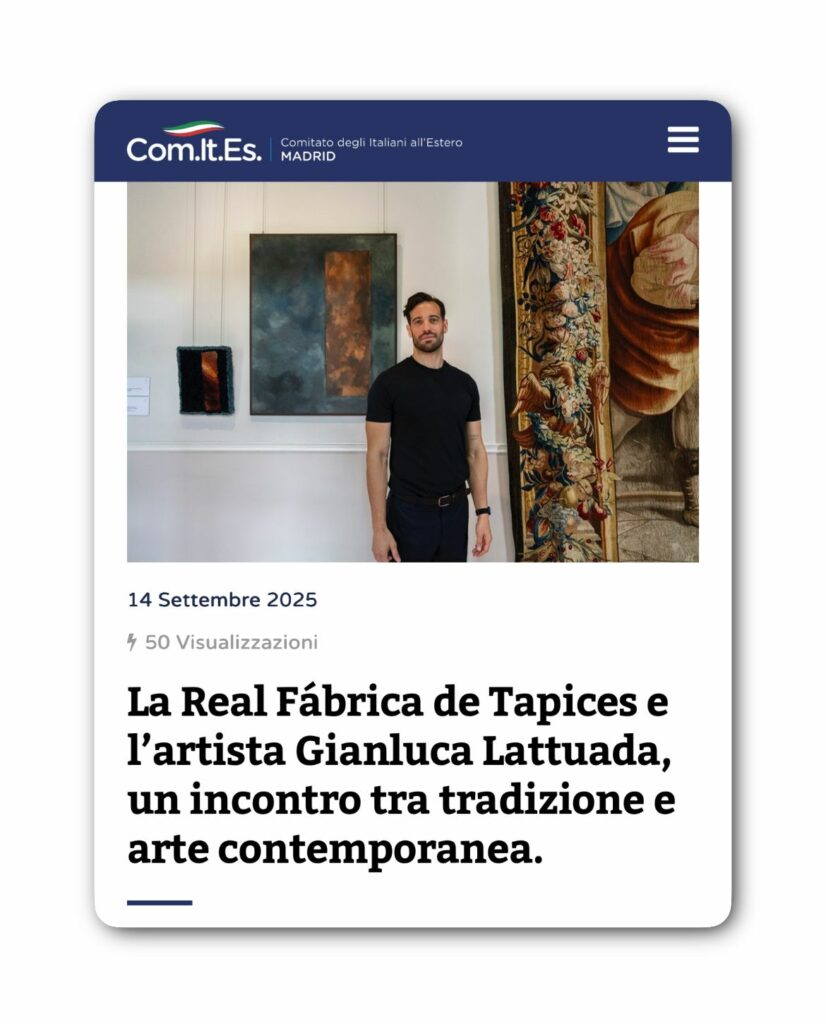
Presented at the historic Real Fábrica de Tapices in Madrid, Lo que fuimos y lo que seremos emerged from a three-month artistic residency culminating in a solo exhibition of twenty-three works across painting, textile compositions, works on paper and sculpture.
Founded in 1721, the Royal Tapestry Factory represents one of Europe’s most significant institutions dedicated to textile heritage and craftsmanship. Within this historical setting, Lattuada developed a body of work investigating the relationships between material memory, artistic transformation and the continuity of cultural heritage.
Rather than approaching the institution’s historical collections as objects of reference, the project established an active dialogue between past and present, allowing contemporary abstraction and centuries-old textile traditions to occupy a shared space.

Gianluca Lattuada is a visual artist and creative director from Italy, currently residing in Madrid, Spain. His work as a painter has been showcased in exhibitions across Italy, Spain, UK, US and Mexico, and has been published in international art books and magazines. Among his institutional projects are a solo exhibition at the Great Museum of the Maya World promoted by the Secretariat of Culture and the Arts of Yucatán (Yucatán, 2023), inclusion in the permanent collection of the Museum of Contemporary Art Paolo Pini – MAPP (Milan, 2024), an artist residency with a solo show at the Royal Tapestry Factory promoted by the Italian Cultural Institute of Madrid and ComItEs Madrid (Madrid, 2025), a site-specific installation at the Italian Cultural Institute of Madrid (2025), a group show at Museum of Human Evolucion (Burgos, 2025).

Material, memory and transformation
At the centre of the project lies a reversal of the traditional creative process.
Instead of beginning with a preparatory drawing, Lattuada worked from fragments of historical carpets recovered from the Factory’s workshops and archives. Materials bearing traces of previous uses and histories became the starting point for new compositions, in which abstract geometries, chromatic relationships and material interventions generated further possibilities of form.
These compositions subsequently informed paintings on canvas, establishing a circular relationship between textile and pictorial languages.
Within this process, discarded material is no longer understood as waste, but as an active repository of memory. Transformation does not erase its history; it allows that history to remain present within a new visual structure.
Sustainability consequently becomes more than a subject addressed by the works. It operates as a method of artistic production, grounded in the reuse and reinterpretation of existing materials.
In dialogue with the collection
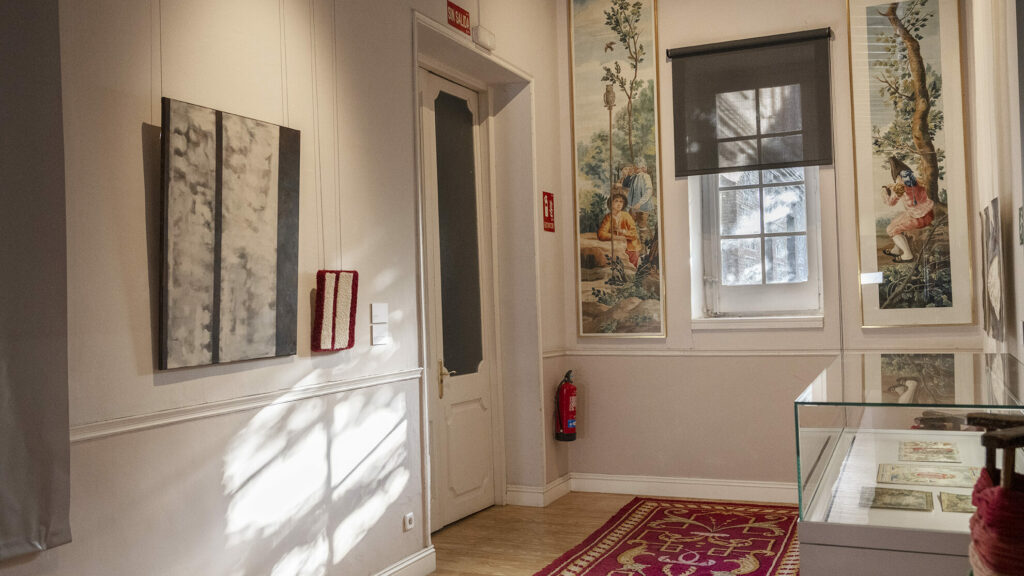
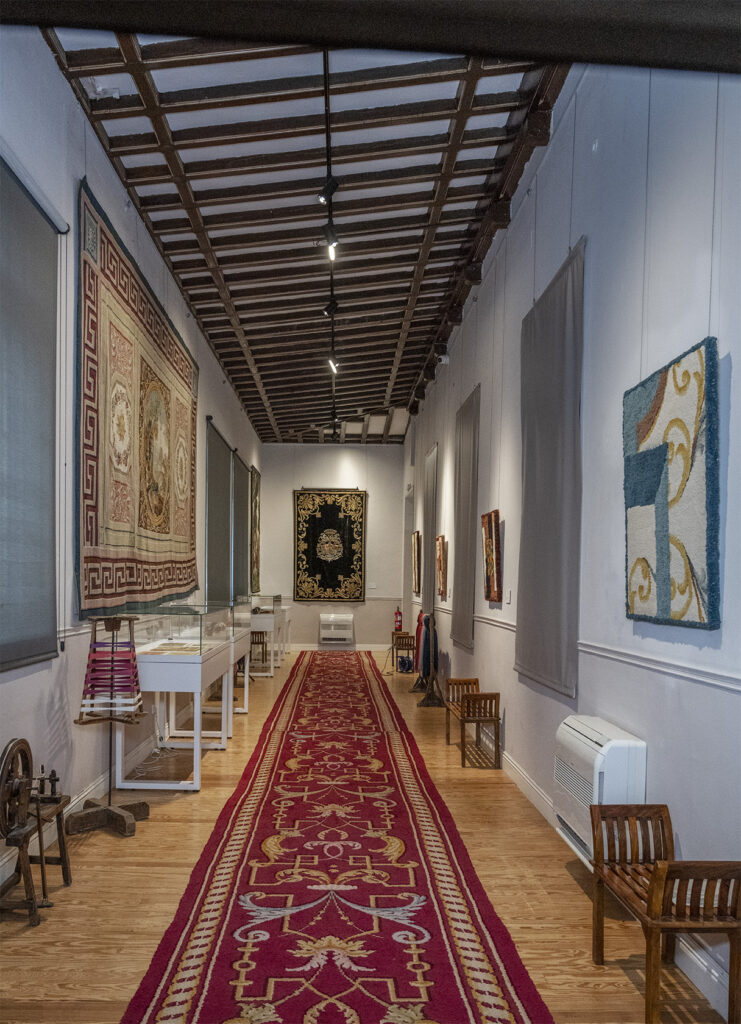
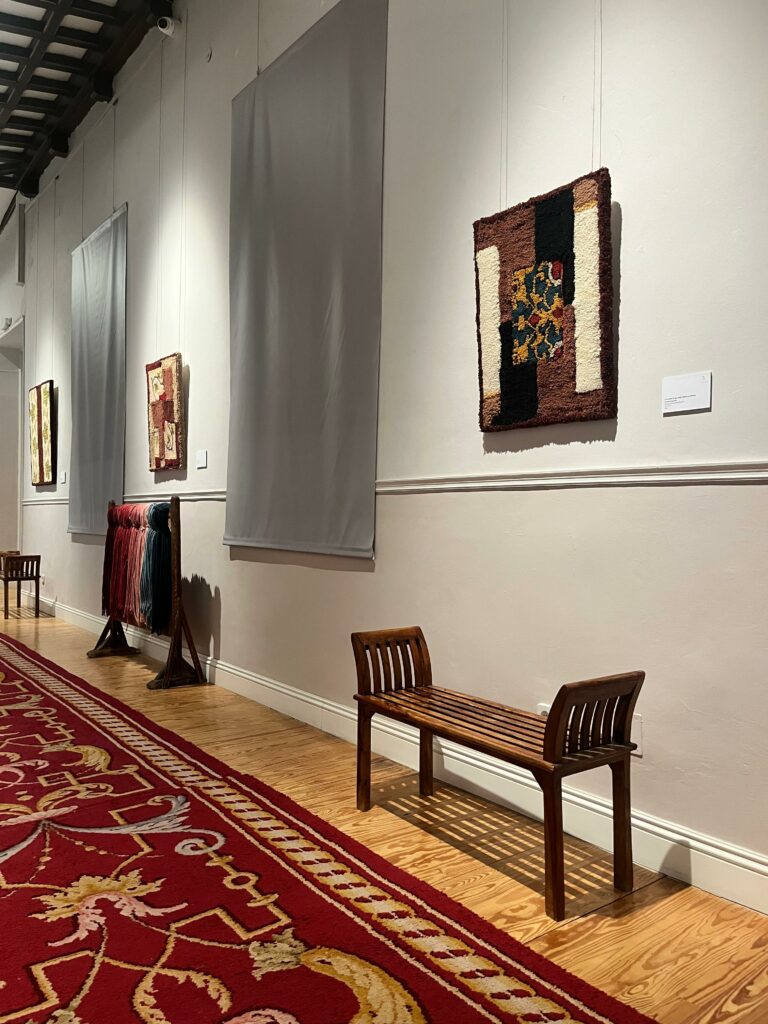
A defining element of the exhibition was the relationship established between Lattuada’s contemporary works and the Royal Tapestry Factory’s permanent collection.
Each intervention was conceived in conversation with the historical tapestry, carpet or preparatory cartoon displayed nearby. These relationships were developed through correspondences of colour, proportion, material and compositional rhythm, rather than through direct imitation.
The exhibition invited visitors to experience different historical moments simultaneously, questioning the conventional separation between heritage and contemporary creation.
In this encounter, the past is not presented as something completed and preserved at a distance. It becomes an active presence, capable of generating new meanings through the artistic practices of the present.
Exhibition views
A selection of installation views documenting the dialogue between the contemporary works and the Royal Tapestry Factory’s historical collection.


Art beyond borders
The exhibition brought together diplomatic and cultural representatives from numerous countries, including Italy, Germany, Portugal, Hungary, Morocco, and Paraguay. Beyond its artistic dimension, the project became an occasion for international cultural exchange, highlighting art’s capacity to connect institutions, traditions, and perspectives across national boundaries.
Selected Press
RTVE – Canal 24 horas (Spain)
Idealista News (Spain) – Read the full interview→